
España participa en la misión que traerá a la Tie<strong>rra las primeras muestras de una luna de Marte</strong>

El 19 de octubre tendrá lugar el lanzamiento de MMX (Martian Moons eX-ploration) liderada por la Agencia Japonesa de Exploración Aeroespacial (JAXA), una misión histórica destinada a desvelar el origen de las misteriosas lunas marcianas
<strong>Dust may reveal a hidden third planet forming in the iconic PDS70 system</strong>

A recent study led by the Centro de Astrobiología (CAB, CSIC-INTA) reports the discovery of two dust clumps in the iconic planet-forming system PDS 70, potentially pointing to the presence of a third planet still in the process of formation. The study also finds tentative direct evidence of the young planet itself, whose gravitational influence […]
<strong>A dynamic atlas reveals regolith migration pathways on Phobos</strong>

A study led by the Centro de Astrobiología (CAB), CSIC-INTA, maps, for the first time on a global scale, the preferred routes of Phobos’ surface material and provides a scientific basis for planning MMX observations and interpreting its samples.
THE GEOCHEMISTRY OF THE EARLY EARTH MAY HAVE SHAPED THE CHEMISTRY THAT PRECEDED LIFE

Researchers at the Centre for Astrobiology (CAB), CSIC-INTA) have shown that the composition and abundance of minerals can influence HCN chemistry in aqueous environments, thereby modulating the balance between molecular diversity and selectivity, two key factors in understanding how the first protobiological systems evolved towards life.
<strong>Sugar in interstellar space</strong>

Una investigación liderada por el Centro de Astrobiología (CAB), CSIC-INTA, ha permitido detectar por primera vez un azúcar en el medio interestelar. Se trata de la eritrulosa, una molécula quiral con cuatro átomos de carbono (C4H8O4 ó HOCH2CH(OH)COCH2OH). La detección de eritrulosa demuestra que moléculas muy relevantes para el origen de la vida se pueden […]
<strong>CARMENES reports the strongest evidence to date for a magnetic field on an exoplanet</strong>

The journal Science publishes a study led by CSIC centres that provides the most compelling evidence of the influence of a planet on the behaviour of its star. The results have made it possible to detect and estimate the intensity of the magnetic field of the exoplanet GJ 436 b, opening a new way to […]
El investigador del CAB Carlos Briones gana el Premio CSIC-Fundación BBVA de Comunicación Científica

El investigador Carlos Briones es el ganador del premio en la sección “investigador” (el otro premiado es periodista) “por haber logrado transmitir en un tono accesible atractivo los misterios sobre el Universo y el origen de la vida a una amplia audiencia a partir de su sólida formación científica”. El jurado destaco su producción como […]
<a href="https://cab.inta-csic.es/premios/izaskun-jimenez-premio-mastercard-frace-en-la-especialidad-de-fisica-y-quimica/32/">Izaskun Jiménez premio Mastercard-FRACE en la especialidad de Física y Química</a>

Nuevo éxito del Centro de Astrobiología en la obtención de tiempo de observación con el Telescopio Espacial James Webb

Investigadores del Centro de Astrobiología (CAB), CSIC-INTA, han vuelto a obtener un gran éxito para desarrollar proyectos en diversos campos de la astrofísica durante el quinto año de operaciones del Telescopio Espacial James Webb (JWST). El CAB se posiciona dentro del selecto club de centros de investigación a nivel mundial, que han conseguido obtener más […]
<strong>Novel Ecosystem in a Sulfur-Dependent Cold Seep Described in the Chilean Continental Margin</strong>

A recent study, led by the Center for Astrobiology (CAB), CSIC-INTA, describes a novel cold seep located at a depth of 2.5 km and in close proximity of the coast of Antofagasta, Chile. This site is inhabited by a wide variety of microorganisms involved in the cycling of sulfur, carbon and nitrogen, among other elements. […]
Laura Colzi awarded a Junior Leader postdoctoral fellowship from the “la Caixa” Foundation to investigate the origin of elements in the Galaxy

The Centro de Astrobiología (CAB), CSIC-INTA, celebrates the awarding of a Junior Leader postdoctoral fellowship from the “la Caixa” Foundation to the researcher Laura Colzi, currently a postdoctoral researcher at the center. Laura Colzi carries out her work within the MIRAME (Measuring Isotopic Ratios Across Multi-scale Environments) project, focused on studying the origin and evolution […]
<strong>Life on Mars: hyperarid microbial growth with water vapor, a new record.</strong>

Traditionally, habitability has been linked to the stable presence of liquid water, which has led to the current surface of Mars being considered too dry to support active life. However, a recent international study in which the Centro de Astrobiología participates shows that microorganisms that inhabit rocks in terrestrial deserts, such as the Mojave Desert, […]
Largest image of its kind shows hidden chemistry at the heart of the Milky Way

A study carried out by an international collaboration involving researchers from the Centro de Astrobiología (CAB), CSIC-INTA, has captured a new and sur- prising image of the central region of our Milky Way, revealing a complex net- work of cosmic gas filaments with unprecedented detail. Obtained with ALMA (Atacama Large Millimeter/submillimeter Array), this rich dataset […]
Cosmic ray effects on Mars rocks

A recent study, led by the Center for Astrobiology (CAB), CSIC-INTA, shows how cosmic rays have shaped the elements of Martian rocks such as those collected by NASA’s Perseverance rover in Jezero Crater floor. This research is the most detailed simulation to date of how energetic cosmic particles produce rare isotopes, or cosmogenic nuclides, in […]
James Webb Space Telescope reveals an exceptional richness of organic molecules in one of the most obscured galaxies in the local Universe

A recent study, led by the Center for Astrobiology (CAB), CSIC-INTA, has uncovered an unprecedented richness of small organic molecules in the deeply obscured nucleus of a nearby galaxy, thanks to observations made with the James Webb Space Telescope (JWST). The work, published in Nature Astronomy, provides new insights into how complex organic molecules and […]
Astrophysicists Discover Largest Sulfur-Containing Molecular Compound in Space

A recent study led by the Max Planck Institute for Extraterrestrial Physics (MPE) and the Centro de Astrobiología (CAB), CSIC-INTA, unveils the first detection of a complex, ring- shaped molecule containing 13 atoms —including sulfur— in interstellar space. This discovery represents a major step forward in understanding the chemical reservoir of the interstellar medium and, […]
Reconstruction of the oldest protein complexes from the Precambrian era

A recent study, led by Centro de Astrobiologia (CAB), INTA-CSIC, and the Centro Nacional de Biotecnologia (CNB-CSIC), shows the experimental structural reconstruction of the most primitive multimeric proteins to date, that is, those early machines built from protein units that assemble to generate a new biological function. The work contributes to deciphering the evolutionary path […]
First Light for 4MOST Marks a New Era of Spectroscopic Surveys — CAB Scientists Contribute to a Global Milestone

The Centro de Astrobiología (CAB), CSIC-INTA participates in the 4MOST project that saw first-light in October 2025. This new telescope will determine the chemical composition and movements of stars, and distances to galaxies, in the southern hemisphere. Link to the the text of the press release
First Identification of Calcium Sulfide in the Interstellar Medium

An international team of scientists led by the Centro de Astrobiología (CAB), CSIC-INTA, has achieved the first identification of CaS in the interstellar medium. This finding expands the chemical inventory and paves the way for the search for other refractory compounds that may shed light on where and how sulfur is stored in the Universe. […]
Exoplanet candidate to host life outside the Solar System

A recent study, led by the Centro de Astrobiología (CAB), CSIC-INTA, reports the discovery of the best candidate to date to search for life outside the Solar System. The planet has an equilibrium temperature compatible with the presence of liquid water, and it orbits every 54 days a star cooler than the Sun, but without […]
DNA fragments could survive in Martian rocks for more than 100 million years

A recent study, led by the Center for Astrobiology (CAB), CSIC-INTA, reports that deoxyribonucleic acid (DNA) can preserve biological information even after millions of years of exposure to radiation under the extreme conditions of the Martian surface. This finding opens new avenues for searching for past life on Mars and other potentially habitable environments. Link […]
A new step towards the origin of life: Clays and the Moon, key to RNA formation

A recent study led by the Centro de Astrobiología (CAB), CSIC-INTA, proposes a new approach to the origin and replication of ribonucleic acid (RNA) on the early Earth, through the lens of complexity theory. The researchers have developed a theoretical and computational model called EarlyWorld that sheds light on one of science’s greatest enigmas: the […]
The rise of the galactic empire: JWST discovers the nine most distant galaxies known

A study led by Pablo Pérez-González at the Centro de Astrobiología, (CAB), CSIC-INTA (Spain) recently discovered nine galaxies that are candidates to being the most distant galaxies known. By using a combination of images taken with the NIRCam instrument on the James Webb Space Telescope (JWST) these galaxies could be picked out from more nearby […]
Two Cold Brown Dwarfs Orbiting two Young Red Dwarf

A revolutionary astronomical discovery: Astronomers Discover Rare Hierarchical Quadruple System: Pair of Cold Brown Dwarfs Orbiting Pair of Young Red Dwarf Link to the original press release text
First Image in Space of a Molecule with a Disulfide Bond

A international team of scientists led by the Centro of Astrobiología (CAB), CSIC-INTA, has achieved the first space-based image of S₂H, a key disulfide bond molecule in terrestrial biochemistry, towards the Horsehead Nebula. This finding suggests that complex molecules, possibly related to the origin of life, could form in cold interstellar clouds long before planets. […]
Discovery of dimethyl sulfide (DMS) in the interstellar medium: Is it a good biomarker?

An international team of scientists led by the Centro de Astrobiología (CAB), CSIC-INTA, has discovered the presence of dimethyl sulfide (DMS) in the interstellar medium. This finding shows that DMS can form abiotically in space, challenging its reliability as a biomarker Link to the the text of the press release
Discovery of the first planetary system of the KOBE experiment

A team of researchers from several European institutions, led by the Center for Astrobi- ology (CAB, CSIC-INTA), has confirmed the first planetary system in one of the 50 stars monitored by the KOBE project.
Succesfully the tested the new module of the SOLID-LDChip life detection system

The Centro de Astrobiologia (CAB), INTA-CSIC, is successfully testing the reception and dosing module of the SOLID-LDChip life detection system in a campaign at Haughton Crater, Canadian Arctic, in collaboration with NASA’s Ames Research Center. Link to press release text
Death of a galaxy seen in 3D by JWST

In a recent study led by the Center for Astrobiology (CAB), CSIC-INTA (Spain), and the University of Cambridge (United Kingdom), published in Nature Astronomy, a group of researchers used the NIRSpec instrument onboard JWST to understand how galaxies cease their star formation activity in the early Universe, how they “die” and become quiescent. They […]
Microbial life in one of the most extreme ecosystems on Earth: the Antarctic Plateau.

An international team led by the Centro de Astrobiologia (CAB), CSIC-INTA, and the Universidad Autónoma de Madrid, shows a novel platform for scientific exploration of the most remote places in Antarctica,
Earth’s first breaths: how nutrient recycling fuelled early oxygenation
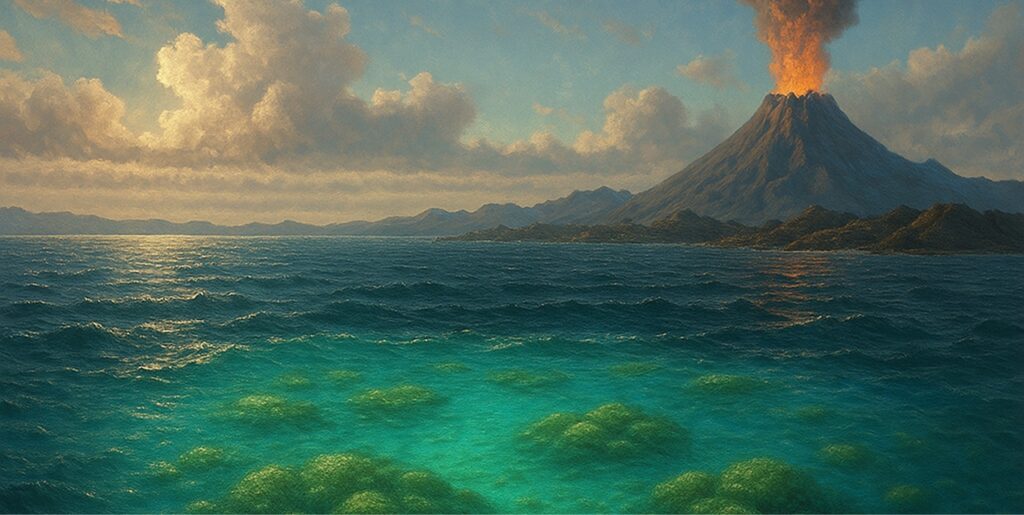
An international team led by the Centro de Astrobiologia (CAB), CSIC-INTA, how the first oxygen on earth was formed.
TRAPPIST-1 b’s thermal emission in two colors, new insights on the planet’s nature

Scientists from Centro de Astrobiología (CSIC-INTA) participates in this study about the nature of exoplanet TRAPPIST-1 B
Supermassive black holes alter the chemical evolution of galaxies
TheAstrobiology Center (CAB) (CSIC-INTA) leeds this study showing how the supermassive quasar-hided black hole activity have transformed the chemical compositions of the existing galasy gas. quasar
Huge microbial diversity adapted to extreme conditions on a 11,000-year-old lake terrace

An international group of scientists led by the Centro de Astrobiología (CAB), INTA- CSIC, and the IMDEA Water Institute, in Madrid (Spain), identified hundreds of new microbial genomes of previously unreported species in 11,000-year-old sediments from Laguna Lejía, a lake in the Chilean Altiplano
Neptune-like exoplanets cluster in a particular region near their stars

An international team of astronomers led by Centro de Astrobiología (CAB), INTA- CSIC and the University of Geneva, has uncovered the “Neptunian Ridge”, a newly identified structure in the distribution of exoplanets.
Discovering the “living fossils” of the Atacama Trench

A team of astrobiologers led by the Center for Astrobiology (CAB), CSIC-INTA (Spain), have just discovered “living fossils” in the atacama trens in North Chile shoreline.
Black hole’s business-as-usual in the earliest universe highlights galaxy evolution problem | Max Planck Institute for Astronomy

A team of astronomers participated by the Center for Astrobiology (CAB), CSIC-INTA (Spain), have just published new discoveries about black holes Bossman et al. Descarga
A Waltz of Millions of Years in the Milky Way: An Ultracool Subdwarf with a White Dwarf. First Age Reference

VVV1256-62 A and B are a couple formed by a white dwarf cooler than the Sun and a low-mass, low-metallicity cool dwarf (L type) that are orbiting each other with a period of about 60,000 years, dancing a million-year waltz across the Galaxy. This is the first time that the age of an L dwarf […]
The dusty nature of little red dots, the enigmatic galaxies discovered by the James Webb Space Telescope

A team of astronomers led by the Center for Astrobiology (CAB), CSIC-INTA (Spain), have just published new discoveries about the most enigmatic galaxies discovered by the James Webb Space Telescope, the so-called Little Red Dots. With new data taken with an instrument that they helped to build, MIRI, the CAB-led team have discovered that little […]
<strong>ALMA Unlocks the Chemical Secrets of a Starburst Galaxy</strong>

An international team of astrophysicists, with the participation of researchers of the Centro de Astrobiología (CAB, CSIC-INTA), has observed with unprecedented detail the center of a galaxy known as NGC 253 using the Atacama Large Millimeter/submillimeter Array (ALMA). They detected more than one hundred molecules, far more than previous studies outside the Milky Way have […]
Detection of Evolutionary Conserved Peptides as Biomarkers for the Search for Life on other Planets

Research from the Centro de Astrobiología (CAB), INTA-CSIC, proposes the detection of selected peptides conserved throughout evolution as biomarkers for the search for life on Mars.
ASTEROID RYUGU ARRIVES AT INTA
A team led by INTA scientists, together with UAH, CIEMAT and the University of Tokyo, has obtained a sample of the asteroid Ryugu from the Japanese space agency (JAXA) for one year after passing an international competitive phase. It will be used to study the prebiotic chemistry of the origins of the Solar System using […]
The oldest known ‘dead’ galaxy detected with the James Webb Space Telescope.

An international team of researchers with the participation of the Centro de Astrobiología (CAB, CSIC-INTA), a joint center of the Consejo Superior de Investigaciones Científicas (CSIC) and the Instituto Nacional de Técnica Aeroespacial (INTA), has discovered a dead galaxy only 700 million years after the Big Bang. JADES-GS-z7-01-QU is the oldest observed galaxy of its […]
DART Impact likely reshaped Dimorphos

The global reshaping of the asteroid Dimorphos could be a result of the impact caused by NASA’s Double Asteroid Redirection Test (DART), as suggested in a recent publication in Nature Astronomy, in which two researchers from CAB, Jens Ormö and Isabel Herreros, are coauthors. This discovery hints at the possibility that Dimorphos is essentially a […]
International Day of Women and Girls in Science 2024

This year, we want to show you a short but very important video to convey a message to celebrate this important day. We would like to see a future where the need for a day like this fades away as soon as possible. A future where our society and scientific system show greater equality of […]
The oldest black hole discovered thanks to the James Webb Space Telescope’s NIRSpec instrument

An international group of scientists, including researchers from the Centro de Astrobiología (CAB), INTA-CSIC, recently presented the discovery of the oldest black hole ever observed in the journal Nature.
New “cola de gato” structure discovered with JWST

A recent study by an international team led by a researcher from the Centro de Astrobiología (CAB), CSIC-INTA, has discovered a new structure in the disc of Beta Pictoris. Observations with the Webb Space Telescope have revealed this cat-tail dust structure in the best-studied debris disc.
Group Achievement Award 2024 for the JWST MIRI instrument

The Royal Astronomical Society has awarded the 2024 Group Achievement Award to the international team that developed the MIRI instrument for the James Webb Space Telescope (JWST), which includes CAB scientists and INTA engineers. The RAS citation acknowledges the impressive achievement of successfully completing the development of this complex and lengthy project, and its culmination […]
Ammonia trail leads to exoplanets

En un reciente estudio, liderado por el Centro de Astrobiología (CAB), CSIC-INTA, un equipo de investigadores de diversos institutos europeos y norteamericanos ha logrado medir el amoníaco en la atmósfera de una estrella enana marrón fría. La abundancia isotópica del amoníaco puede utilizarse para estudiar cómo se forman los planetas gaseosos gigantes. Las relaciones entre […]
Identifican con el JWST la galaxia similar a la Vía Láctea más lejana jamás observada

An international scientific team, led by the Centro de Astrobiología (CAB), CSIC-INTA, has discovered the most distant barred spiral galaxy known to date. The discovery, made using data from the James Webb Space Telescope, has been published in the journal Nature.
Marina Fernández Ruz, CAB student, wins “Yo investigo, Yo soy CSIC 2024” award

Marina Fernández Ruz, a doctoral student from CAB, has been awarded the “Yo investigo, Yo soy CSIC 2024” prize annually granted by the Department for Postgraduate and Specialization (DPE) of the Spanish National Research Council (CSIC) for the best outreach videos by young doctoral candidates. Marina presented her thesis project entitled “Modeling the Origin of […]
Miguel Sanz-Novo, awarded the Miller Prize at the International Symposium on Molecular Spectroscopy

Juan de la Cierva researcher at CAB, Miguel Sanz-Novo, has been awarded the 2025 Miller Prize at the 78th International Symposium on Molecular Spectroscopy (ISMS), the world’s premier annual meeting in the field of atomic and molecular spectroscopy. The prize, now in its eleventh edition, was established in honor of Professor Terry A. Miller and […]
Carla Alejandre and Marina Fernández Ruz, CAB students, win the “Best Poster Communication” and “My thesis in 3 minutes” awards respectively at the “XXIV Congreso de Física Estadística FISES’23”.

Carla Alejandre, student of the Prebiotic Chemistry and Physics of Complex Systems Group of the CAB, has received the “Best Poster Communication” award at the XXIV Congreso de Física Estadística FISES’23 for her work entitled “Modeling a primordial, non-enzymatic RNA replication in the early Earth”. Only three of the 121 posters presented received this award. […]
Observada turbulencia nocturna en el cráter Jezero (Marte)

Un reciente estudio, liderado por el Centro de Astrobiología (CAB), CSIC-INTA, ha evidenciado la presencia de turbulencia atmosférica nocturna en el cráter Jezero(Marte), donde se encuentra el rover Perseverance de NASA. Los datos del instrumento español MEDA (Mars Environmental Dynamics Analyzer)adquiridos durante la mitad de un año marciano, y las simulaciones llevadas a cabo conel […]
<strong>tRNA queuosine modification is involved in biofilm formation and virulence in bacteria</strong>

Discovery of a bacterial mechanism to increase their virulence and resistance: a new target for treatment of infections. Bacteria mainly live forming complex communities, such as biofilms, which are clusters of bacteria attached to each other and to a surface. This way of life makes them very resistant, and makes them difficult to eliminate when […]
Discovery of carbonic acid in space, first interstellar molecule with three oxygen atoms

An international team led by the Centre for Astrobiology (CAB, CSIC-INTA) has discovered the presence of carbonic acid in space, the first interstellar molecule with more than three oxygen atoms and the third carboxylic acid detected to date. Its detection represents a leap in the understanding of interstellar chemical complexity, which may have played a […]
Does this planet have a sibling sharing the same orbit?

A study led by the Centro de Astrobiología (CAB), CSIC-INTA, has found what may be the most robust evidence that pairs of planets can form by sharing a path around their star. In the orbital path of one of the two youngest known planets, PDS 70 b, a dust cloud up to twice the mass […]
The James Webb telescope detects much more light than expected coming from the primeval universe

In a recent study led by the Center for Astrobiology (CAB), CSIC-INTA (Spain), researchers from 9 countries have analyzed the deepest images taken by the NIRCam instrument of the James Webb telescope, within the Guaranteed Time granted to the members of the team that built the MIRI instrument, and have found many more galaxies, much […]
Stranger galaxies: how do galaxies detected by JWST look like?
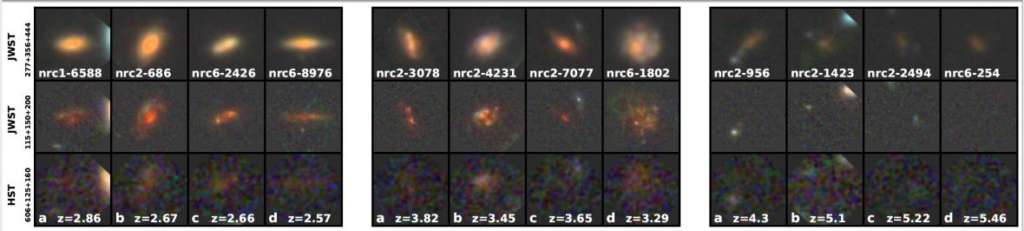
A recent study led by Centro de Astrobiología (CAB), CSIC-INTA, researchers have studied in detail previously unknown galaxies discovered by JWST, finding that the early Universe was much more active forming stars than expected. The JWST is providing many surprises to astronomers. Among them, a new paper that just appeared in The Astrophysical Journal Letters […]
The lonely giants: Do the most massive stars live alone?

New research published posthumously by lead author Dr Simon Clark from the Open University in the UK demonstrates, for the first time, that the most massive stars known are not as lonely as previously thought. Instead, they are mainly found in binary systems with companion stars. Massive stars live violent lives: they continuously expel material […]
Astronomy: Assessing the impact of the DART mission

International teams, with the participation of the Centro de Astrobiología (CAB), CSIC-INTA, publish today in Nature the results of the first observations of NASA’s DART mission. Understanding how the impact of the DART spacecraft modified the orbit of the asteroid Dimorphos will help in the development of strategies and defense systems against possible collisions of […]
CARMENES project boosts the number of known planets in the solar neighbourhood

20,000 observations from the Calar Alto telescope are made public, and have led to the discovery of 59 planets, some of them potentially habitable. The CARMENES survey is led by a consortium of Spanish and German institutions. The instrument has proven to be a success and will continue to provide information on small cool stars […]
CAB participates in the scientific planning of the Mars Sample Return mission

The Center for Astrobiology (CAB, CSIC-INTA)) will host a meeting between February 20 and 24, 2023 of the international group for the scientific planning of the “Mars Sample Return Mission”, the MCSG (for its acronym in English, Mars sample return Campaign Science Group). The National Aeronautics and Space Administration (NASA) and the European Space Agency […]
Two Earths in “habitable” orbits around a nearby star

An international team of astrophysicists with the participation of three researchers from Centro de Astrobiología (CAB), CSIC-INTA, announces the discovery of two possibly rocky planets in the habitable zone of the star GJ 1002, a red dwarf located barely 16 light-years away from the solar system. Rocky planets like the Earth are the norm, rather […]
WEAVE First Light: a new window into the Universe

WEAVE First Light The Isaac Newton Group of Telescopes (ING) and the WEAVE instrument team present first-light observations with the WEAVE spectrograph. WEAVE is a powerful, next-generation multi-fibre spectrograph on the William Herschel Telescope (WHT) at the Observatorio del Roque de los Muchachos (La Palma, Canary Islands) now being commissioned on-sky and already generating high-quality […]
Experiments in preparation for the defense against future Earth-threatening asteroids

A recent study led by the Centro de Astrobiología (CAB), CSIC-INTA, forms a vital part in the preparations for the NASA’s mission DART (Double Asteroid Redirection Test), that will impact the asteroid Dimorphos on the 27th of September. This mission aims to test the concept of a kinetic impactor to deflect an eventual future Earth-threatening […]
The best studied terrestrial planet outside the Solar System

An international scientific team led by astronomers from the Centro de Astrobiología (CAB), CSIC-INTA, has measured the mass and radius of an Earth-like exoplanet with unprecedented accuracy, allowing them to make robust predictions on the structure and composition of its interior and atmosphere. The detailed analysis is announced today by the journal Astronomy & Astrophysics. […]
Escape from Bermuda: The ejection of its massive stars leaves a stellar cluster orphan
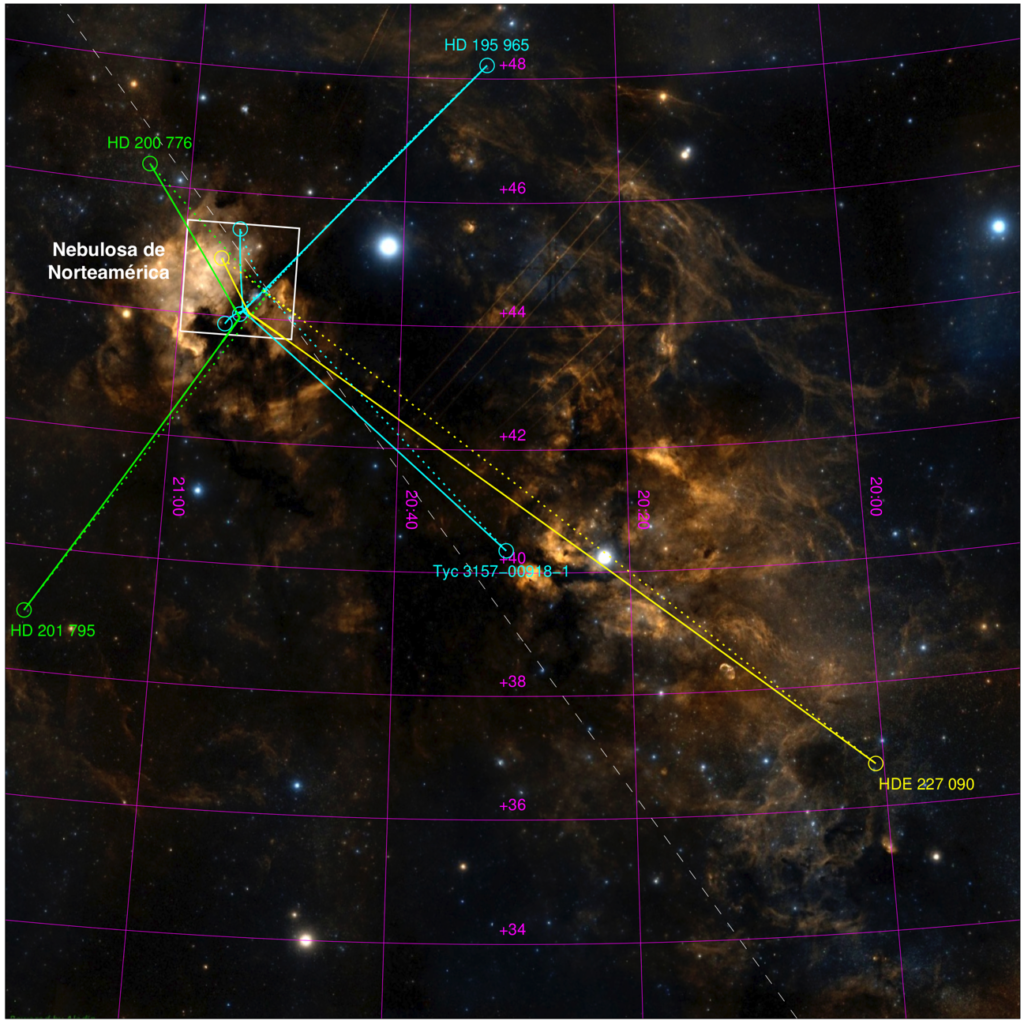
A recent study ed by the Centro de Astrobiología (CAB, CSIC-INTA) has discovered that a young stellar cluster has expelled most of its recently formed massive stars. The stellar ejections took place in three close encounters between several of them that happened 1.9, 1.6 y 1,5 million years (Ma) ago, respectively. If this phenomenon is […]
The dramatic final dance of the stars with a common envelope

Centro de Astrobiología (CAB, CSIC-INTA) participates in the study of fifteen peculiar stars which turned out to be double stars that, after sharing an envelope, lost most of their mass. Unlike the Sun, most stars form binary systems, in which two stars revolve around a common center. Sometimes the distance between the two is so […]
Scientific study reveals that the giant planets reach their “maturity” much earlier than expected

An international team of scientists with the participation of the Centro de Astrobiología (CSIC-INTA) and other institutions in Spain, Italy, Germany, Belgium, the United Kingdom and Mexico has measured for the first time the masses of gaseous and giant planets at a very early age in the evolution of planetary systems. V1298 Tau, a solar-type […]
20th SVO school- Virtual Observatory Tools

The Spanish Virtual Observatory (SVO [1]) is an initiative whose main goal is to promote, coordinate and develop the activities related to the Virtual Observatory (VO) in Spain. In this context, one of the main tasks of the SVO has been the organization of schools and workshops aiming at disseminating the possibilities that the Virtual […]
The most distant galaxy similar to the Milky Way discovered with JWST

An international team, led by the Centro de Astrobiología (CAB), CSIC-INTA, has discovered the most distant barred spiral galaxy similar to the Milky Way observed to date. The discovery, made possible thanks to the extraordinary capabilities of the James Webb Space Telescope, has been published in the Nature journal. 08-11-2023 We believed that barred spiral […]
Detection of molecular biomarkers in Triassic-Jurassic rocks from the Atacama Desert and their relevance to the search for life on Mars

A multidisciplinary team from the Centro de Astrobiología (CSIC-INTA) and the Universidad Católica del Norte (Chile) has applied a powerful multianalytical platform to detect traces of life in rocks more than 200 million years old from the Atacama Desert as system training for future astrobiological missions to Mars. The search for life in the Universe […]
Dwarfs and the first galaxies: diesel or jerky?

Astronomers from the Centro de Astrobiología (CAB, CSIC-INTA), in collaboration with researchers from the UK, Mexico and Chile, are searching for clues about the origins of the first stars and structures formed in the Universe. For that purpose, they are using data from the most ambitious project carried out with the Hubble Space Telescope (HST) […]
New exhibition “AstrónomAs” opens its doors

The exhibition ‘AstrónomAs’ focuses on the contribution of women who have worked and continue to work in this scientific discipline. The digital version includes information on 270 female astronomers and their areas of research, along with other downloadable educational materials, interactive games, podcasts and videos. The exhibition is complemented by a smaller traveling version in […]
Víctor Rivilla and Eduardo Cueto win the award for best virtual poster 2021 from EANA

Centro de Astrobiología researchers Víctor Rivilla (Interstellar and Circumstellar Medium Group) and Eduardo Cueto (Prebiotic Chemistry Group) have won the 2021 Poster Award of the European Astrobiology Network Association (EANA) with two posters presenting two articles which also involve other CAB researchers. The award was presented to the authors on Friday 10 September, by André […]
CAB scientists put star formation mechanisms to the test

An international scientific team led by Centro de Astrobiología (CAB, CSIC-INTA) has used the European Southern Observatory’s (ESO) VLTI interferometer to observe the innermost parts of a sample of protoplanetary discs and test current models of star formation. Young stars are surrounded by disc-shaped structures whose material, gas and dust, “feeds” the central star, leading […]
CAB receives the EANA 20th Anniversary Outstanding Paper Award in Astrobiology

A multidisciplinary team from Centro de Astrobiología has won the European Astrobiology Network Association (EANA) award to the most outstanding research paper published during 2020. The award will be presented to the authors today, Friday 10 September, by André Brack, chairman of the jury and first President of EANA, and the current President of EANA, […]
CAB – “María de Maeztu” fosters transdisciplinary projects led by young researchers

The María de Maeztu Academy of the Centro de Astrobiología closed the 2020-2021 academic year on June 15 with the final of the first edition of the transdisciplinary challenges. The winning team was that of the Biomarkers objective, formed by the CAB and INTA researchers: Jorge Lillo-Box, Patricia Cruz, David Ruano Gallego, Mercedes Moreno-Paz, Alberto […]